Welcome to our blog! Here we regularly publish in-depth analyses, the latest news and in-depth research from the world of cryptocurrencies, blockchain technology and digital finance.
First comes a genuine payout, then a request for additional payment. How the task scam works, how to recognize it, and what options are available after payment.
Tangem reports a data breach at its external support. The article explains which data might be affected, whether wallets are secure, and how users can avoid phishing.
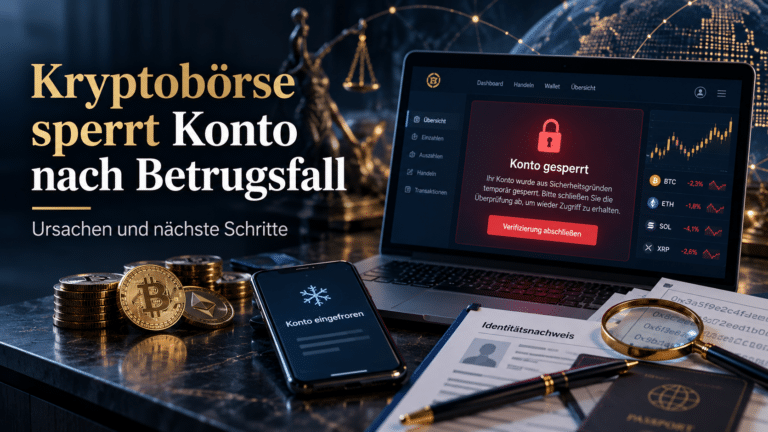
Why does a cryptocurrency exchange suddenly block withdrawals or account access after a fraud case? A real-world example illustrates typical causes, common mistakes, and the most important next steps. Blog_Cryptoexchange_Account_Blocked…
One case shows how victims of crypto fraud can themselves become suspects of money laundering – and what is important now in relation to banks and investigating authorities.
Your ID and selfie have been uploaded, now what? What happens to the data, which blocks and reports are advisable immediately, and how you can protect yourself for later.
Is an analysis worthwhile in your case? An honest assessment of the extent of damage, the evidence at the scene, and the costs, including the cases in which we advise against commissioning such an analysis.
When the seed phrase falls into the wrong hands, every hour counts. What steps will really help now, what should you document, and what mistakes will destroy the trail?.
You can still access your wallet, see your tokens, and yet every new deposit disappears within seconds. This isn't a bug in the app. An automated script is manipulating your key. Here's how it works, how to recognize it, and what you absolutely shouldn't do.
You confirmed something on a website that seemed harmless. Shortly afterward, tokens or NFTs are missing. Not a hack, not a security breach, but an authorization you yourself granted. Why this happens so easily and what can really help now.
A person claiming to be a blockchain employee will contact you and promise to recover your lost money. This is technically impossible and explains how to react correctly.