



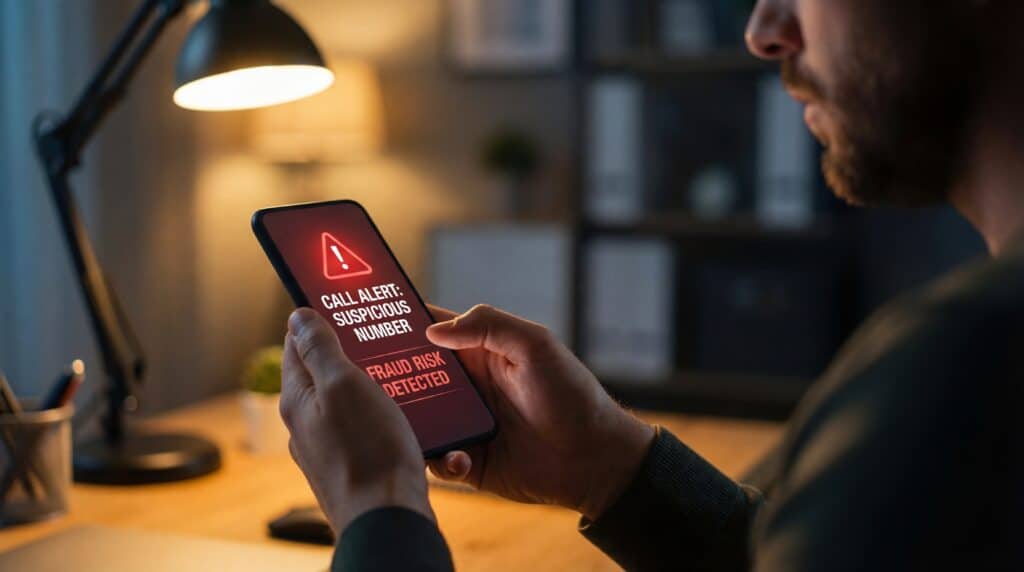
The phone rings. On the other end is someone who politely explains that they are a blockchain employee. A balance has appeared in your name—an old crypto account or lost money from a previous investment. The funds can now be withdrawn, but a fee, tax, or commission is due first.
That sounds technical and official. But it's the exact opposite of proof of credibility. "The blockchain" isn't a company or a government agency. It has no employees, no customer service, and doesn't make phone calls. Anyone who says that has already exposed themselves.
What exactly is a blockchain?
Put simply, a blockchain is a digital ledger. It stores information such as transactions in chronological order. Many interconnected computers have a copy of this ledger and compare new entries according to predefined rules.
The term literally means "blockchain". New data records are grouped into blocks and appended to the existing blocks. Therefore, confirmed entries cannot be easily changed retroactively.
Imagine a shared digital cash book:
- Many participants have a copy of it.
- New entries are reviewed and added according to fixed rules.
- Previous entries cannot be changed without the user noticing.
- A single central authority that manages everything is not absolutely necessary.
Blockchains document cryptocurrency transactions, among other things. However, blockchain and cryptocurrency are not the same. Blockchain is the technology; Bitcoin and other cryptocurrencies are applications of this technology. We explain this in more detail in [link/section]. Crypto forensics explained simply.
Why there can be no employees of the blockchain
A blockchain is a technical system, just like the internet or email. No one is an "internet employee." Likewise, there is no central blockchain company that manages all crypto assets, monitors transactions, or proactively contacts defrauded investors.
There are, of course, legitimate companies involved with cryptocurrencies: exchanges, wallet providers, and analytics and forensics firms. However, their employees are employees of that specific company, not of "the blockchain" itself. A reputable provider will clearly identify itself by name and can be verified through independently verifiable contact information and, if necessary, official authorization.
To make matters worse, some companies include the term in their name, such as the wallet and exchange provider Blockchain.com. Perpetrators deliberately exploit this similarity, claiming to be calling "from Blockchain." However, legitimate providers never call customers unsolicited to request withdrawals and never ask for the seed phrase.
Claiming to be calling from "the blockchain", a "blockchain headquarters" or a "blockchain department" does not make a conversation any more credible.
Three technical facts that will immediately expose the call
1. Credit balances belong to addresses, not names. On a public blockchain, crypto assets are assigned to an address. Only those who possess the private key can access them. There is no central register where a balance is recorded in your name, and from which someone could discover a forgotten account.
2. Confirmed transactions cannot be reversed. Blockchain technology doesn't support recalls like direct debits. Only with certain tokens, such as the stablecoins USDT and USDC, can the issuer block individual addresses. This occurs at the issuer's instigation or at the request of law enforcement, never in exchange for a prepayment demanded over the phone. You can read more about how this actually works at [link to relevant section]. Freeze USDT and USDC.
3. You don't pay anything upfront to receive crypto assets. The network fee is always paid by the sending party. Anyone who genuinely wants to transfer money to you doesn't need any money from you. Therefore, any demand for taxes, fees, insurance, or commissions before an alleged payout is grounds for exclusion.
How the scam typically works
The perpetrators often already know quite a bit about you. This information comes from a previous investment fraud, a data breach, or shared contact lists. Lists of previous victims are traded within this network. This is precisely why the calls initially seem credible.
Callers often claim:
- A crypto balance has been registered in your name;
- an old investment has now reached a high value;
- Frozen Bitcoin or other crypto assets could be released;
- Lost money was „found“ on a blockchain;
- An authority, law firm or investigative body has approved the repayment;
- Taxes, fees, insurance or commissions must be paid before the payout.
Often, this is a recovery scam, a follow-up fraud. Those who have already lost money are contacted again. They promise to recover the funds but demand further payments. Police and consumer protection agencies explicitly warn against such alleged helpers, investigators, or lawyers. We show how these providers operate in [link to article]. How to recognize recovery scams after crypto fraud. That something like this can be stopped is demonstrated by our Case report: €35,000 secured and a recovery scam prevented.
Warning signs: How to recognize a fraudulent call
Special caution is advised if a caller:
- makes contact unsolicited and introduces himself only as an employee of "the blockchain";
- an unexpected credit or promises the recovery of previous losses;
- Time pressure creates or asks you to remain silent;
- an advance payment demands for taxes, fees or commissions, requires payments in cryptocurrency, to unknown or foreign accounts, via voucher code or as a cash deposit at a crypto ATM;
- a test or verification payment required to access a foreign wallet address;
- Access data, TANs, passwords, copies of identification documents or requests wallet information, especially the seed or recovery phrase;
- prompts you to access your wallet to connect to a website via a link sent to you or to confirm a release;
- Remote maintenance software such as wanting to install AnyDesk or TeamViewer, or requiring the user to open online banking or wallet during the phone call.
The seed phrase is the master key to your wallet. Whoever knows it can usually access all the crypto assets stored within. Never share it with anyone, not even for supposed "verification" or "recovery".
And one more thing: A German phone number, a professional-looking website, official-looking documents, or knowledge of your previous investments prove absolutely nothing. Phone numbers and identities can be faked, websites can be deceptively replicated, and personal data can be obtained from previous fraud cases. Furthermore, authorities, courts, and banks never request payments in cryptocurrency or via voucher codes. Our [information/guide/etc.] can help you get a first impression. Crypto fraud scam check.
Here's how to respond correctly to such a call
End the conversation. Don't let yourself be pressured and don't discuss alleged credit balances.
Do not disclose any data. Do not provide any bank, credit card, wallet or access details and do not send any identification documents.
Do not install anything. Never grant remote access to your computer, tablet, or smartphone.
Do not pay any money. Do not pay any alleged taxes, unlock fees, commissions, or security payments.
Verify identity independently. Do not use the caller's phone numbers, links, or contact details, and do not call back. Find the official information of the alleged company yourself, and for financial service providers, check the BaFin company database.
Document contact. Note the phone number, name, time, content of the conversation, payment details, and internet addresses used. Save emails, chats, screenshots, and transaction receipts.
Report call. You can report misused telephone numbers to the Federal Network Agency; the Federal Financial Supervisory Authority (BaFin) accepts reports of unauthorized financial offers.
Have you already submitted data or made a payment? Follow these steps now.
Act as quickly as possible:
- Break off contact and pay nothing more, even if only "one last fee" is missing.
- Immediately inform your bank, credit card company, or payment service provider. Ask if payments can be stopped, reversed, or accounts secured.
- If you have sent cryptocurrencies, save the transaction ID (TXID), recipient address, amount, and time. If the payment was processed through a cryptocurrency exchange, inform their customer service or compliance department.
- If remote maintenance software was installed, disconnect the device from the internet and have it checked by a professional. Afterwards, change all access data from a secure device and, where possible, activate two-factor authentication.
- If you have disclosed your wallet login credentials or seed phrase, seek professional help immediately to secure any remaining crypto assets. Typically, the assets will need to be transferred to a newly created wallet.
- File a criminal complaint with the police or via your state's online police station. We'll show you how to do this below. Report crypto fraud.
- Secure all evidence. Do not delete any messages, phone numbers, emails, wallet addresses, or transaction data. You can read about which pieces of evidence are particularly important below. Evidence in cases of crypto fraud.
- Be especially vigilant afterwards: Victims are often contacted again by alleged investigators, consumer protection agencies, law firms or recovery companies.
One point surprises many victims: those who subsequently forward payments or make their account available can themselves become targets of the authorities. We describe what happens then below. Account blocked due to suspected money laundering.
Is it possible to recover lost crypto assets?
Transactions on public blockchains are traceable. Payment flows can be analyzed and often traced back to entry and withdrawal points such as cryptocurrency exchanges. This is the basis of any serious investigation. However, a technical chargeback is not.
What a Blockchain analysis The result is a reliable report on the flow of funds, which the police, public prosecutor's office, and lawyers can then use in their work. Whether assets are ultimately secured is decided in criminal or civil proceedings and depends on the cooperation of the service providers and authorities involved. We describe what is realistically possible below. Recover cryptocurrencies and asset recovery.
A reputable provider will fully name the company and its representatives, operate on the basis of a written contract, transparently disclose the chances of success and the associated costs, and will not offer any guarantees. Anyone who calls unsolicited, promises a secure recovery, and demands an advance payment, possibly in cryptocurrency to a private wallet address, is highly likely to be involved in fraud themselves. We also do not contact victims proactively.
Conclusion: Technical terms don't make anyone credible.
Blockchain is a technology, not an organization with employees or customer service. Anyone who calls you unsolicited claiming to be a "blockchain employee" and promising you credit, a payout, or the recovery of lost funds is highly suspicious.
Trustworthiness is not established through technical jargon, professional-looking documents, or knowledge of a previous fraud case. What matters is whether a specifically named company can be independently verified and whether it possesses the necessary licenses. Never pay in advance, never disclose login credentials, and never allow remote access to your devices.
If you are unsure whether a contact is genuine, use our Free initial assessment for crypto fraud or Contact us directly.
FAQs about calls from alleged blockchain employees
Are there any employees of the blockchain?
No. A blockchain is a technical system without organization, staff, or customer service. Employees only exist at specific companies such as exchanges, wallet providers, or analytics firms.
Can an asset in my name be held on a blockchain?
No. Crypto assets are associated with addresses, not names. There is no central directory of names from which someone could find a forgotten account.
How does the caller know about my loss?
This knowledge often stems from previous investment fraud, data leaks, or traded contact lists of former victims. This knowledge does not demonstrate trustworthiness; on the contrary.
Do I have to pay anything in advance to receive crypto assets?
No. The network fee is paid by the sending party. Any demand for tax, fee, insurance, or commission before payment is grounds for exclusion.
Can my coins really be frozen and then released?
For certain tokens like USDT and USDC, the issuer can block addresses, either on its own initiative or at the request of authorities. A caller cannot do this.
Why am I never allowed to share my seed phrase?
It's the master key to your wallet. Whoever knows it can usually access all your crypto assets. Even supposed verification doesn't justify sharing it.
Does a German phone number prove that the call is genuine?
No. Phone numbers and identities can be faked, and websites can be deceptively replicated. Only verify the specifically named company using independently found contact information.
I've already paid. What do I do first?
Do not make any further payments, immediately inform your bank or payment service provider, secure the TXID, recipient address, amount and time, file a criminal complaint and keep all evidence unchanged.
Does Crypto Investigation contact victims proactively?
No. If you are contacted unsolicited under our name, please verify this exclusively via the official contact details on krypto-investigation.de.
Further official information
BaFin: Warning about financial fraud with crypto assets
Police crime prevention: Recognizing and avoiding cyber trading fraud
Police crime prevention: Cyber trading fraud checklist
Note: This article is for general information purposes only and does not replace legal advice in individual cases. Crypto Investigation is a forensic service provider and not a law firm.