



Acting decisively and quickly after a crypto scam secures crucial evidence and significantly increases the chances of recovering lost assets.
Crypto fraud is a shock – both financially and emotionally. Many victims react with hesitancy, believing the damage is irreversible. The opposite is true: crucial steps can be taken, especially in the first hours and days after the fraud. This guide shows you how to correctly report crypto fraud, which authorities are responsible, and what absolutely must be secured before filing a report.
Why swift action is crucial in cases of crypto fraud
Cryptocurrencies are volatile – not in their existence, but certainly in their availability. Scammers try to conceal acquired coins as quickly as possible via mixing services, decentralized exchanges, or international platforms. Every hour that passes without action can make transactions harder to trace. Blockchain It itself stores every transaction permanently and immutably – but identifying the people behind it requires technical speed.
Professional Crypto forensic experts They can analyze transaction paths in real time and report identified wallet addresses to crypto platforms for blocking. Freeze requests The highest probability of success is achieved if the coins have not yet been moved. Acting quickly protects your assets and secures the digital traces that can be crucial for later prosecution.
Contact the Crypto Investigation Immediately after the fraud is noticed. An initial analysis of the transactions can provide crucial clues within a short time.
Which authorities are responsible for crypto fraud?
Jurisdiction depends on the location of the crime, the amount of damages, and the type of fraud. Generally, the local police station at the victim's place of residence is the first point of contact. Alternatively, a report can be filed directly with the public prosecutor's office. For large-scale cases with an international dimension, specialized departments are often responsible: the State Criminal Police Office or the central cybercrime units of the respective federal states.
In Germany, almost every federal state has specialized cybercrime units. These include the ZAC (Central and Contact Point for Cybercrime) in North Rhine-Westphalia, the ZIT in Hesse, and the economic crimes department at large public prosecutor's offices. These units are equipped to handle digital cases and can Blockchain analyses demand and use them more specifically.
A forensic report Analysis by certified crypto forensic experts significantly improves the quality of the report. It provides investigators with immediately usable transaction analyses and wallet mappings, which considerably accelerates the investigative process.
Reporting crypto fraud: Step-by-step guide to filing a criminal complaint
Step 1: Gather all available information regarding your case. This includes transaction IDs (TXIDs), the recipient's wallet addresses, emails, chat histories, screenshots of trading platforms, and all domain addresses used. The more complete your documentation, the smoother the appeal process will be.
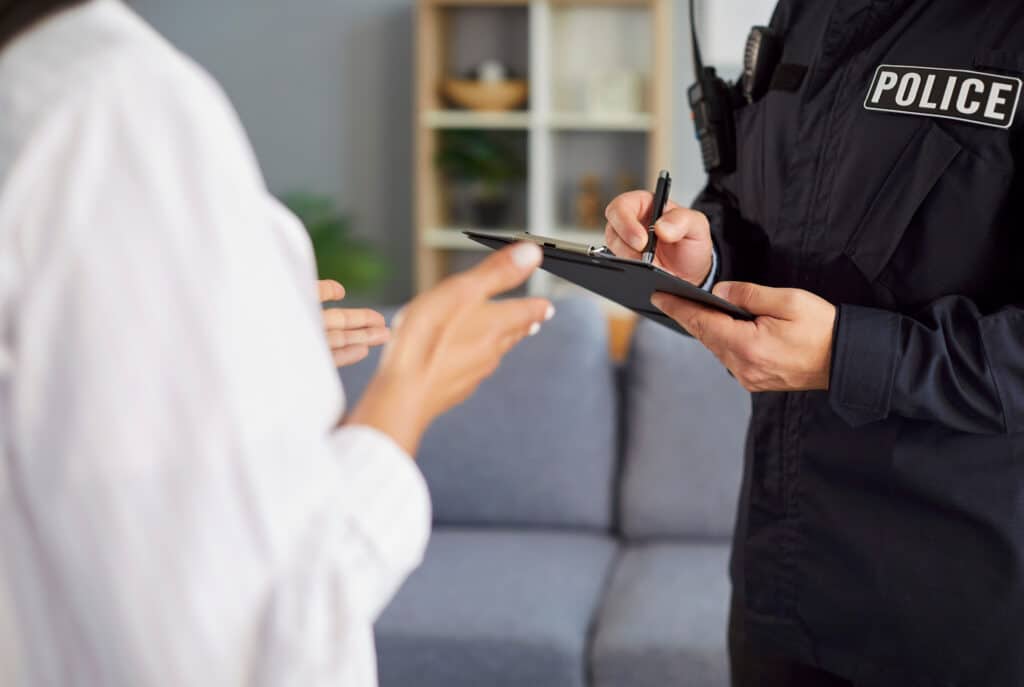
Step 2: File a criminal complaint – either in person at the police station, in writing with the public prosecutor's office, or, in many German states, via the respective state's online portal. Describe the incident as chronologically and objectively as possible. Avoid speculating about the perpetrators' identities unless you know them for certain.
Step 3: Simultaneously, commission a forensic analysis. A court-admissible report detailing the precise transaction chain, the wallets involved, and potential identifying clues enables investigators to take immediate action. Upon request, the crypto investigation team will also handle communication with the relevant authorities.
What evidence you need to secure before filing a report
The quality of your evidence is crucial to the course of the investigation. Secure all digital communication channels: Screenshots from WhatsApp, Telegram, emails, and trading platforms should be saved in their original format and with visible timestamps. Do not delete any messages – even if they are unpleasant or contain personal information.
Document all payment transactions with exact amounts, dates and times, and the wallet addresses used. If you transferred funds via a cryptocurrency exchange, save the transaction records from your account overview. This data will form the basis for later investigations. Blockchain analysis.
Additionally, note down all contact persons, telephone numbers, platform URLs used, and any witnesses. The more information available, the more precise the forensic investigation can be.
What happens after the report is filed: Investigation and forensic analysis
Upon receipt of a criminal complaint, the investigating authorities begin examining the facts of the case. If sufficiently concrete evidence is found, an investigation is launched. In many cases, however, the police lack specific expertise in the field of crypto forensics. This is where cooperation with private forensic specialists comes into play: A court-admissible expert report with concrete blockchain analyses enables authorities to conduct targeted investigations.
Crypto Investigation works directly with police authorities and public prosecutors. This cooperation allows forensic findings to be efficiently integrated into ongoing investigations. In successful cases, identified crypto assets can be frozen and later transferred to Victims returned become.
Realistic expectations are important: The process can take several months up to two years. Nevertheless, one thing is certain: The blockchain never forgets. Even if fraudsters try to cover their tracks, transactions remain irrevocably stored and forensically verifiable.
Cold wallets and fraud: Even coins stored offline can be found.
A common misconception is that stolen cryptocurrencies stored on a cold wallet—that is, a USB stick or hardware device without an internet connection—are untraceable. This is not true. Every transaction to a cold wallet address is permanently recorded on the blockchain. As soon as the cold wallet is connected to a device to send or sell coins, new transactions are created that can be forensically monitored in real time.
Crypto Investigation employs specialized monitoring tools that continuously track identified wallet addresses. As soon as activity is detected at such an address, freeze requests are immediately sent to the relevant platforms. Even perpetrators who believe they are safe through offline storage will leave traces at the latest when they next activate the wallet.
When is professional forensic support worthwhile?
Professional forensic support is always worthwhile when genuine financial damage has occurred – regardless of the amount. Even in cases of damages under €10,000, forensic reports can provide crucial insights for investigations. For larger sums of damage or complex cases involving international cover-up schemes, professional support is virtually indispensable.
Early assistance is particularly important if coins have been transferred between multiple wallets or exchanged for stablecoins. In such cases, Freeze requests to issuers such as Tether or Circle Requests can be submitted – but only with the correct documentation and through the right channels. Contact Crypto Investigation for an initial free assessment of your case.
Conclusion: Reporting crypto fraud pays off.
Crypto fraud is not a lawless space. Blockchain technology, which appears anonymous to fraudsters, is actually their best piece of evidence. Those who act quickly after a scam, secure evidence, and seek professional support have a realistic chance of success. Traceability, freezing and reimbursement of lost assets.
Filing a criminal complaint, commissioning forensic analysis, and involving the authorities – these three steps form the foundation of any successful fraud investigation. Crypto Investigation guides victims through this process: from the initial case analysis and court-admissible expert reports to communication with public prosecutors and crypto platforms.
FAQs – Frequently Asked Questions about Reporting Crypto Fraud
Can I report crypto fraud online?
Yes, many German states offer online reporting portals. Alternatively, the report can be submitted in writing to the responsible public prosecutor's office. Filing a report in person with the police has the advantage that you can describe your case directly and clarify any questions.
What information do I absolutely need for the ad?
Crucial information includes all recipient wallet addresses, transaction IDs (TXIDs), payment dates and amounts, and all communication records. Screenshots from trading platforms, emails, and chat histories are equally essential. The more complete the documentation, the more effectively investigators and forensic experts can work.
Does it make sense to file a report if the perpetrator is located abroad?
Yes, absolutely. Even in cases involving foreign perpetrators, German authorities can cooperate internationally and submit requests for legal assistance. Many cryptocurrency exchanges worldwide work with law enforcement agencies and block wallets upon request.
How long does it take to get a refund?
This depends heavily on the individual case. In straightforward cases with quickly identified wallets, a freeze can occur within weeks. However, a full refund following a court ruling often takes several months, up to two or three years.
How much does a forensic analysis cost?
Crypto Investigation offers a free initial case assessment. The cost of a full forensic report depends on the complexity of the case, the number of wallets and blockchains involved, and the required amount of documentation. The scope of services will be discussed transparently in a personal consultation.
Do I have to fear becoming a suspect myself?
Generally, no – anyone who files a report is considered a victim. An exception exists if victims unknowingly received and forwarded funds from fraudulent activities. In such cases, they may be held criminally liable. Have such cases reviewed early on.
Will my data be treated confidentially when I file a report?
Criminal complaints are generally treated confidentially. However, during the course of the proceedings, the accused may be informed of the suspected offense. If you have any concerns, please discuss this with a lawyer beforehand.
Can cold wallet assets also be found?
Yes. Even cryptocurrencies stored offline in cold wallets can be located using forensic methods. As soon as a cold wallet is connected to a device, it leaves technical traces. Crypto Investigation has specialized methods for cold wallet forensics.
When is professional forensic support worthwhile?
In any case where measurable financial damage has occurred due to crypto fraud, the sooner you act, the higher the chances of securing your coins before further deception. Contact Crypto Investigation for an initial free assessment.